
Searching Webster Parish Civil Dockets
District-court civil matters start with the official Webster ClerkNet route. The Webster Parish Clerk of Court links it for public use. Its landing screen accepts a case number, instrument number, or name. Results narrow as you type. You will need a registered account to reach the working interface. The public side does not open every advanced field or an unauthenticated civil register. Do not expect a search to surface every filing or image.
Gather a few details before searching. Have the court name ready, plus the case number if known. Add a party name, an approximate filing date, and the type of record you want. That preparation helps you tell an index hit from something worth requesting in copy. A case in Minden or Springhill city court belongs with that separate office. The same goes for a justice-of-the-peace court or federal court, not the parish Clerk. ClerkNet is a handy electronic path. But the courthouse index and the Clerk's certified record still carry the authority.
- Open ClerkNet through the official Clerk route and use a case number, instrument number, or name.
- Register or log in when the application requires an account before operational searching.
- Confirm that the result identifies the 26th Judicial District Court and Webster Parish.
- Identify whether the result supplies an index line, docket entry, or an accessible document image.
- Ask the Civil Department for a search certificate, copy, conforming copy, or certification when the record is not available online.
Note: A party name alone matches loosely. Check the court, the case category, and the date range before ordering copies.
Webster Civil Search Channels
The Webster Clerk civil page gathers the local essentials in one place. It lists request routes, posted deposits, copy prices, and the court schedule. Use ClerkNet for the parish index. You will need an account. There is also a direct civil search form that works offline. Louisiana's statewide clerk infrastructure can help with participating parish records. Still, no statewide search covers every Louisiana court case. So treat it as a supplement rather than a substitute for the Webster Clerk.
| Route | What it can provide | Important limit |
|---|---|---|
| Webster ClerkNet | Real-time county index searching by case number, instrument number, or name | Registered account required; images and availability are subject to terms |
| Civil search request | Clerk's 15-year certificate-of-search service | Request and payment route, not an instant case-detail screen |
| Clerk counter or mail request | Inspection, copies, certification, and help locating the official index | Confirm current fee, delivery, and copy method first |
| eClerksLA/LCRAA | Statewide clerk-record infrastructure with parish-dependent coverage | Not a single all-case Louisiana docket search |
The Clerk's civil page lists Webster Parish civil records, request options, and fees straight from the Clerk's office.
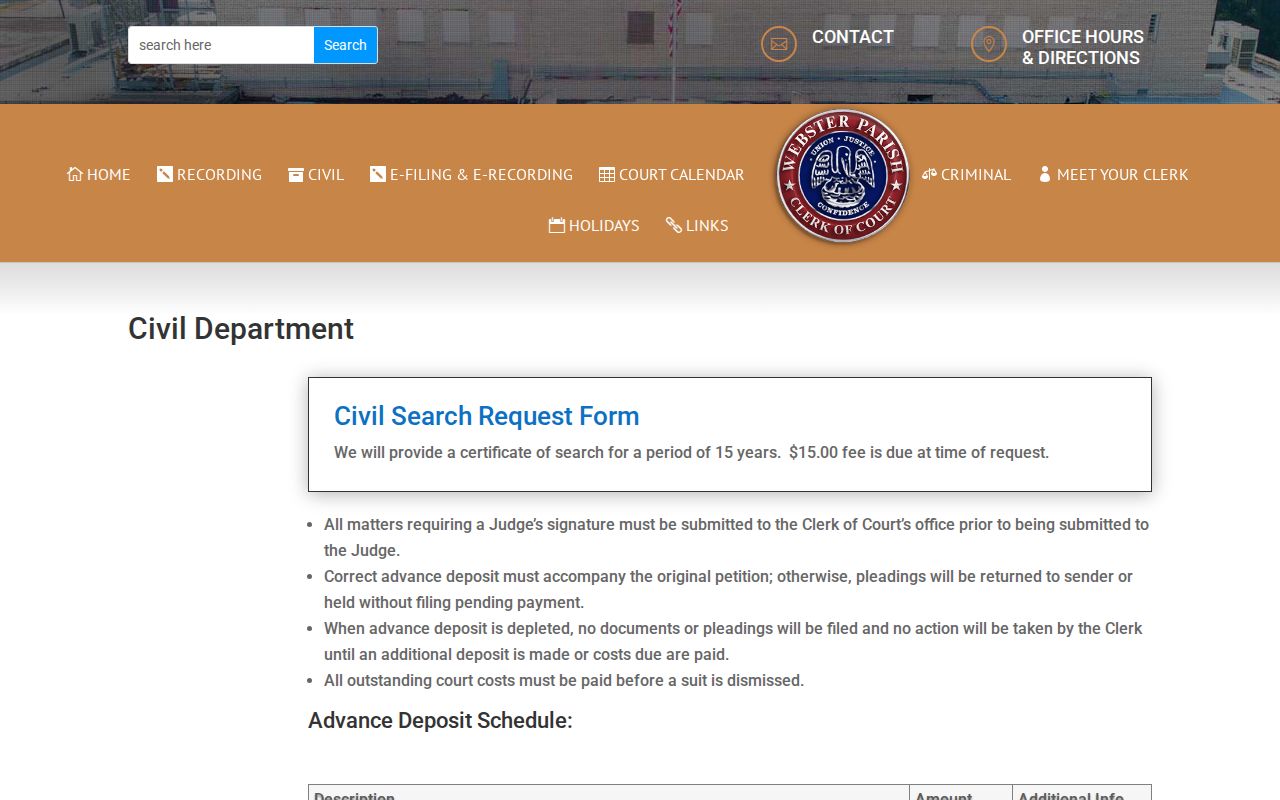
A thin or empty online result is not proof the case is missing. Call the Civil Department. Or go through the courthouse route instead. Historical civil indexes, filed orders, complete copies, and certificates all tend to require the Clerk's record directly. The official pages promise no universal turnaround. So ask for current payment and delivery instructions when you place a request.
Inside a Webster Parish Civil Docket
Webster's public landing page shows no unauthenticated civil case row. None could be transcribed field by field. The dependable inventory is narrower than that. A query by case, instrument, or name runs through ClerkNet. Index results and docket entries appear when the account view exposes them. Filed pleadings and orders surface when available. Copies or certification come by request to the Clerk. That limit is itself useful. It marks the line between documented local access and a guessed civil docket format.
| Search identifier | A case number, instrument number, or party name can be entered through ClerkNet. |
|---|---|
| Index result | Identifies a record in the Clerk's system; it is not necessarily a complete case file. |
| Docket entry | May be visible when the account view makes the entry available for the civil case. |
| Filed document | A petition, answer, motion, order, or judgment may be accessible subject to record rules. |
| Copy product | The Clerk can provide a plain, conforming, certified, or search-certificate product as the request supports. |
Three products get confused constantly. A docket tracks events. A filed document holds the text behind an event, and a certified copy is an authenticated Clerk copy. Since they differ, your request should name the one you actually need. Never read an outcome into a search line. The order or judgment itself is the record you are after.
Webster Civil Certificate Window
The direct Webster civil search request form offers a 15-year certificate of search at $15 per name. It asks for the name or names to search. It also wants the requester, the date, a return method, mailing address, email, and phone. Returns can come by mail, email, or a call for pickup. Payment is flexible too. Mail or deliver the form with payment. Or email it to the Civil Department and call back to pay by card. You can also use the printed PayPal address.
Choose the product first: A 15-year search certificate, an index result, a plain copy, and a certified copy answer different questions and may have different fees.
The form promises no processing-time guarantee and lists no government-ID requirement. Before paying, settle what you actually need: a certificate of search, a copy of one particular filing, or a certified record. A precise request names Webster Parish, the 26th JDC, the party or case number, a date range, and the civil record type.
Civil Case Types on the Docket
The Clerk's civil materials break Webster Parish district civil work into ordinary suits plus family, probate, and special proceeding categories. Case type shapes what may be public and which search or copy request fits. A custody matter and a succession are both civil records, for instance, yet each can carry different sensitive information and different Clerk fee categories.
- Ordinary civil suits, including listed suits with one or more defendants
- Divorce, custody, and support matters
- Name changes and minor settlements
- Successions and probate filings
- Tutorship and interdiction proceedings
- Adoption matters
- Executory process, motions, exceptions, rules, and jury demands
Minden City Court keeps its own limited civil docket, covering small claims, evictions, damage suits, recovery of money or property, and certain notes or accounts within its jurisdiction. Confirm a city-court caption with that court directly. Assuming it sits on the 26th JDC civil docket is a mistake.
Webster Civil Filing Deposits
Before anything else happens in a Webster Parish civil case, the Clerk's posted schedule requires an advance deposit with the petition. The deposit is not a search fee. It covers filing costs. If the money runs out, work on the case can pause until more is deposited, and any unpaid costs must be cleared before a dismissal goes through. Because the schedule is dense and fees shift over time, confirm the current amounts with the Clerk before filing or sending payment.
| Posted civil item | Advance deposit or fee |
|---|---|
| Divorce or custody with minor children | $450 |
| Divorce or custody without minor children | $300 |
| Suit with one defendant in listed categories | $300 |
| Each additional defendant | $100 |
| Name change | $425 |
| Minor settlement | $225 |
| Jury filing fee | $150 |
The Clerk lists deposits separately for probate, adoption, interdiction, tutorship, and executory process. Other steps carry their own charges too. An answer, motion, exception, rule, subpoena, or jury demand may each cost extra. Records staff will walk you through the Clerk's process and the current fees. They cannot tell you whether a legal strategy is wise. One caution: a petition deposit pays filing costs. It does not buy access to someone else's full civil file.
Civil Docket Settings and Hearings
A civil setting on the Webster Parish court docket is a scheduled event. It is not a promise the case finishes that day. The Clerk's calendar splits into Courtroom A, B, and C columns. Protective orders and nonsupport sit apart from those. Preliminary defaults are heard Tuesday, Wednesday, and Friday under the current schedule. Confirmations of default land on Tuesday. Requests should generally reach the Clerk by 3 p.m. on the Friday before. Court starts at 9:30 a.m. unless specially set otherwise. Courtroom A handles Tuesday motions, exceptions, and rules; Wednesday motion hour and trials; Thursday civil trials; and Friday motion hour. Courtrooms B and C carry their own assignments. Check the live Clerk calendar and the 26th JDC calendar. Then verify time, courtroom, judge, and any continuance with the Clerk. If a calendar shows an abbreviation, leave it as an abbreviation unless the Clerk explains it.
Setting path: filed case › request or order › Clerk calendar assignment › hearing or trial › order, reset, or later setting. The current confirmed entry controls over an older date in a case history.
Webster Civil Calendar and Jury Settings
Local rules turn a Webster Parish civil jury setting into a process, not a quick date lookup. No case is fixed until an answer is filed. Counsel requests the setting through the Clerk at the point in the preceding month the rules specify, and the Clerk then sets cases in case-number order as capacity allows. A short objection window follows. So a trial request on the docket does not prove any jury date is final. The official 26th JDC Division A page names the Division A judge and staff who appear in calendar materials.
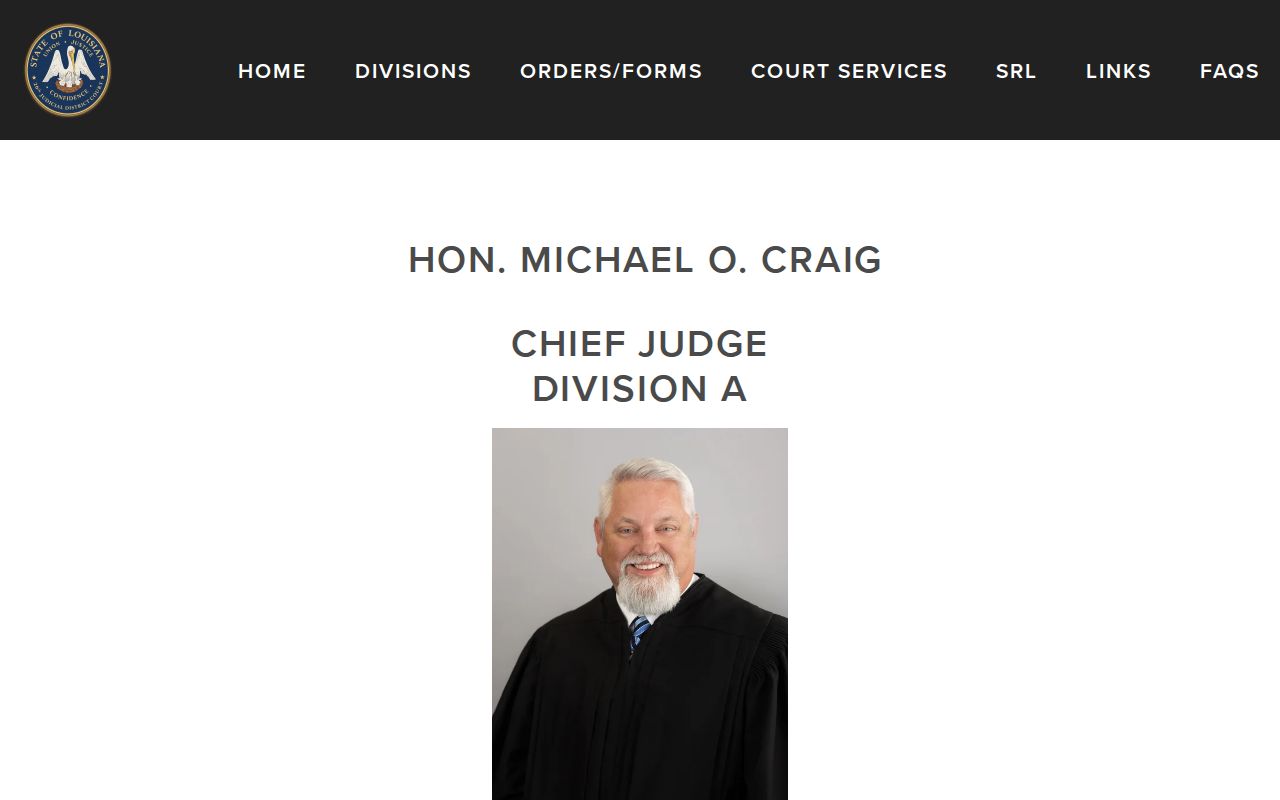
Division details help you spot the assigned court section. Still, certified copies stay with the Clerk. The live calendar governs day-to-day assignment. The official 26th JDC Division B page identifies that other district-court division.
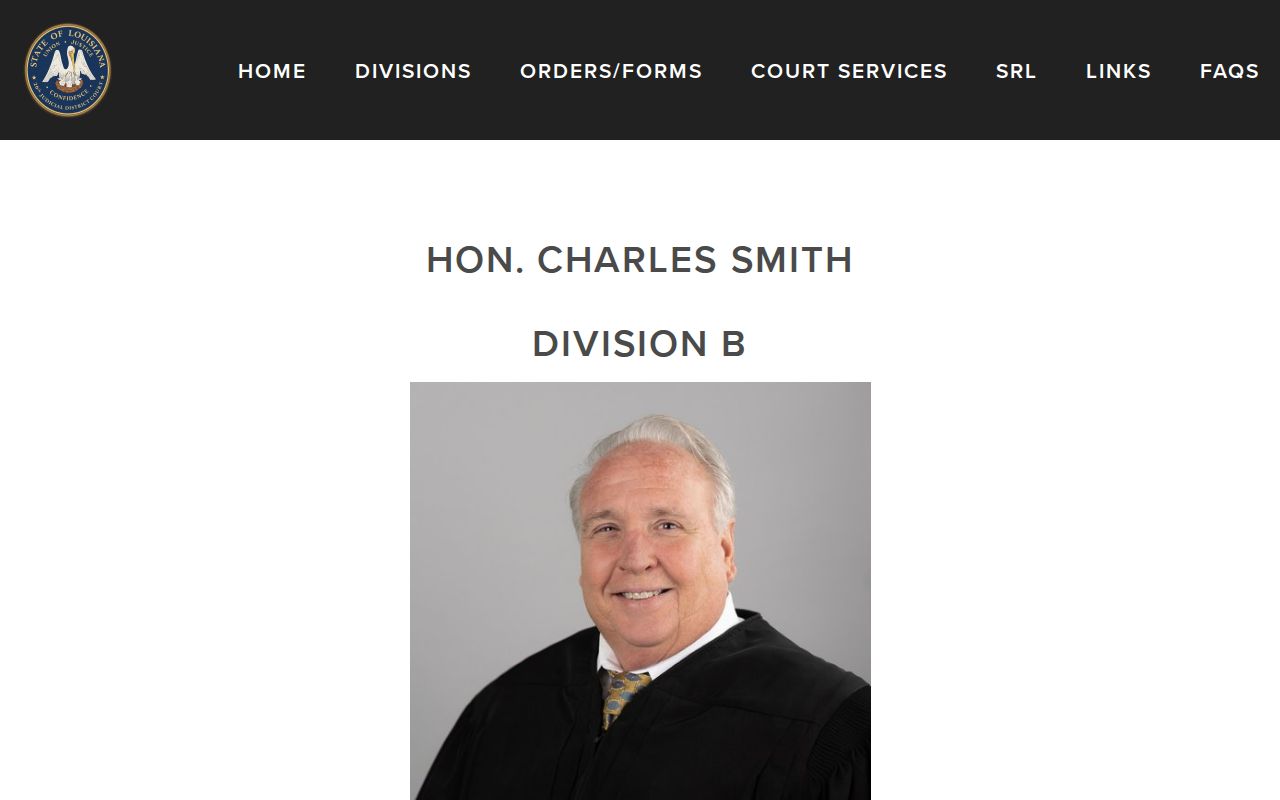
Pair the division, courtroom, date, and case number to avoid a common-name mix-up when confirming a civil setting. The Clerk holds the current record. For an actual hearing, ask the Clerk for the court's operational instructions.
Civil Docket Access Rules
Louisiana's public-record law opens most court records. Civil access still has limits. The Clerk is the legal custodian. A case index may be more open than the attachments behind it. Family, custody, support, adoption, probate, and juvenile-connected files can hold protected details. Think children's information, medical records, finances, school records, and victim data. So ask for the inspectable portion of the specific record you need. Requesting material restricted by law or court order will not get you far.
Key rules:
Louisiana R.S. 44:1 broadly defines public records, subject to exceptions.
Code of Civil Procedure art. 251 makes the clerk the custodian and generally permits inspection and copying during office hours.
Children's Code art. 412 makes juvenile records confidential except for limited authorized access.
Article 251 also limits private copying or scanning equipment in the Clerk's office. A court order must say otherwise. Call ahead for older or bulky files. Ask staff about the current copy method and its fee. Do not assume unrestricted image downloads or same-day retrieval. Public access can include a real limit on how much of a record may be inspected. That limit can also cover how much may be copied.
Webster Civil Privacy and Copies
Match the record product to the task. The Clerk charges $1 per page for a plain civil copy, $3 for a conforming copy, $5 for certification, and $15 for a 15-year civil certificate of search. A plain copy often suffices for reading a filed document. Certification is the Clerk's authentication step, used when an official copy is required. The certificate of search reports what the Clerk's search turned up, and it is not a copy of every document in a case.
- Petition
- The filing that asks the court for relief and begins many civil proceedings.
- Exception
- A procedural challenge or objection, often addressed in civil motion practice.
- Conforming copy
- A Clerk copy type listed separately from a plain copy and certification.
- Certified copy
- A copy authenticated by the Clerk for official use.
Act 352 and related 2026 filing changes restrict full sensitive identifiers in filings. Keep requests focused on the docket, case, filing date, and copy type. The Clerk can explain where a record sits. It can also tell you what a copy costs and how certification works. Legal strategy and the meaning of a civil filing are outside that role. An online index helps with location. When accuracy matters, request the Clerk's official copy or certificate.